TOFU
Awareness
Blog posts, comparison guides, YouTube tutorials, LinkedIn thought leadership
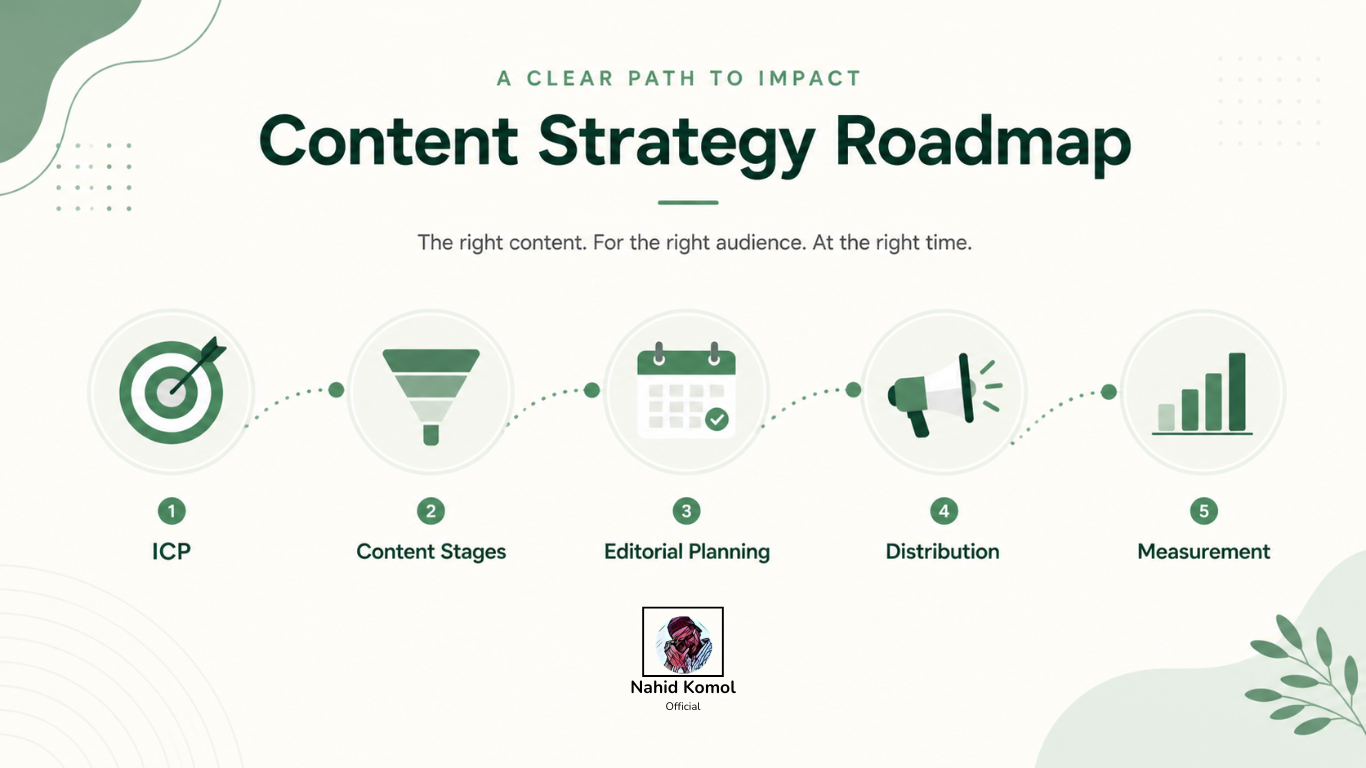
Most content strategies start with the wrong question. The first question is usually “what should we write about?” and then someone opens a keyword tool, picks high-volume topics, and starts a blog that gets traffic but no pipeline.
I’ve seen this exact pattern across every company I’ve worked at. At weDevs, we published 700+ articles. But the pieces that drove actual revenue, the ones that generated $2K from a single post, weren’t the ones chasing keyword volume. They were the ones built around specific customer problems at specific buying stages.
That’s what this guide is about. Not how to write more. How to build a strategy that compounds.
400% Lead generation growth reported by SaaS companies that execute content marketing effectively, versus companies that treat it as a publishing calendar
(Source: Gitnux / DemandMetric)
The problem isn’t output. It’s alignment. Only 40% of content marketers have a documented strategy, and of those that do, most are documenting a publishing schedule, not a growth system.
Here’s the three-layer failure I see most often:
Fix these three things first. Everything else, keyword research, calendars, formats, sits on top of them.
Your ICP is not a persona. It’s a decision-making context.
Who is the person, what problem are they trying to solve, how do they search for solutions, and what makes them say yes or no?
For SaaS, you need three layers:
Company size, industry, tech stack, growth stage. A 5-person startup and a 200-person team have entirely different buying processes, don’t write content that tries to speak to both.
What outcome are they trying to achieve? Not “they want a CRM”, but “they’re losing deals because there’s no visibility into where leads drop off.” That’s what you write about.
What happened in their world that made them start looking? Funding? Headcount growing? A competitor moved? Content that maps to buying triggers converts at 3–5x the rate of general educational content.
💡 WordPress note: For WordPress products, your ICP usually splits two ways: developers/agencies who want extensibility, and non-technical site owners who want something that works out of the box. These need separate content tracks, same product, completely different language.
Recommended watch
Traffic is a vanity metric until you tie it to the pipeline. Here’s how to set goals that actually matter:
| Weak goal | Better goal | Why it matters |
|---|---|---|
| “Generate 200 MQLs from organic in Q2.” | “Rank top 3 for 5 commercial-intent keywords by Q3.” | Ties output to pipeline |
| “Get 50+ backlinks from SaaS-adjacent domains in 6 months.” | “Increase traffic by 30%.” | Traffic quality > traffic volume |
| “Improve brand awareness” | “Create more video content.” | Measurable authority building |
| “Improve brand awareness.” | “Launch 2 product walkthroughs that reduce onboarding support tickets by 15%” | Content with a support ROI |
$3 Content marketing ROI for every $1 invested, compared to $1.80 for paid ads. SEO compounds further: average ROI of $22 per dollar over time.
(Sources: QuickCreator, Firework)
Most teams default to blog posts. That’s fine for SEO. It’s not a full strategy. Here’s how to map content formats to where your buyer actually is:
Blog posts, comparison guides, YouTube tutorials, LinkedIn thought leadership
Case studies, use-case pages, feature pages, webinars, integration guides
Competitor comparison pages, ROI calculators, free trial CTAs, onboarding docs
Product docs, changelog posts, advanced tutorials, customer community content
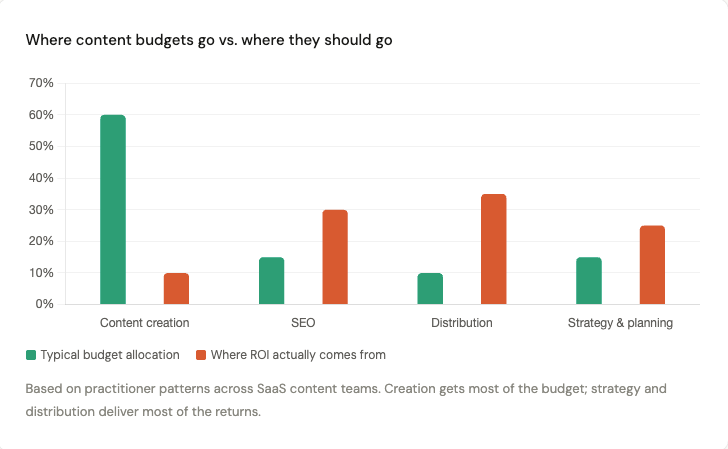
Here’s the thing: most SaaS content teams are 80% TOFU, 15% MOFU, and 5% BOFU. That’s backwards for revenue. The content closest to a buying decision has the highest per-piece ROI. A good competitor comparison page will outperform 20 blog posts in terms of MQL volume.
“70% of B2B marketers say case studies are the best format for converting leads to deals, yet they’re the least-produced content type at most SaaS companies.”
Standard keyword research starts with search volume. That’s fine for a blog. For a content strategy, start with the buying journey instead, then find the keywords that map to each stage.
“how to reduce cart abandonment”, “why is churn high”
“best WooCommerce checkout plugins”, “CRM alternatives”
“[product] pricing”, “[product] review”, “[product] vs [competitor]”
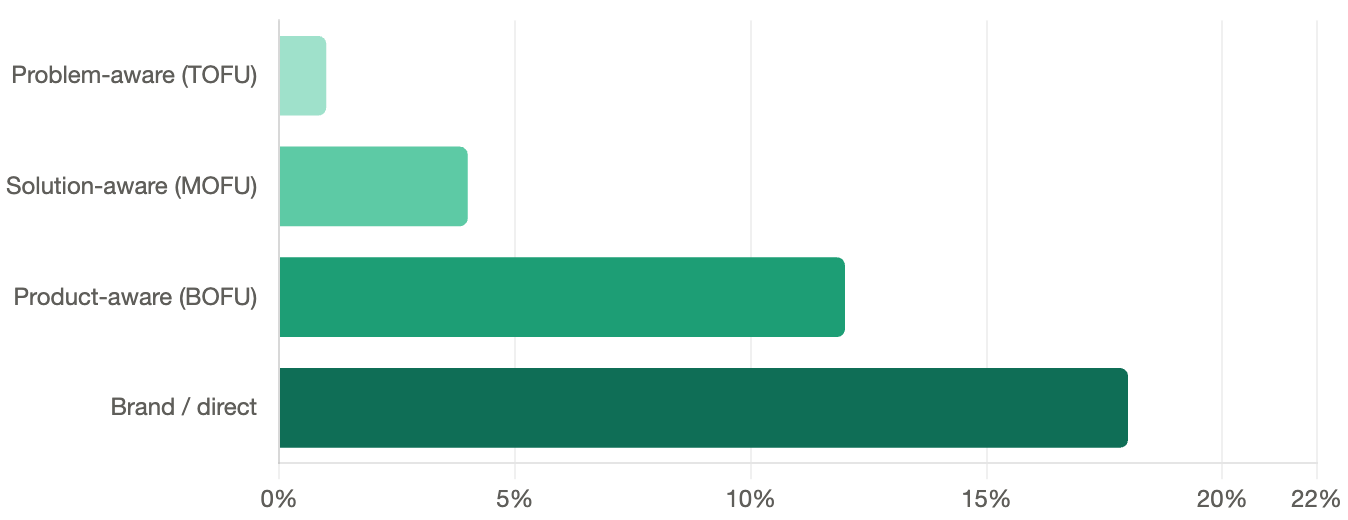
💡 Tip: For WordPress products, add a fourth tier: integration keywords. “WooCommerce + Mailchimp”, “[Your plugin] with Elementor”, “[Your plugin] WPForms integration”. These have low competition and attract users at exactly the right moment.
An editorial calendar is not a content schedule. A content schedule is a list of due dates. An editorial calendar maps each piece to a keyword, a funnel stage, an ICP segment, a distribution channel, and a success metric.
Here’s the structure I use:
| Field | What to fill in |
|---|---|
| Title / working headline | Keyword-rich but reader-first. Not “Content Strategy Guide” — “How to Build a Content Strategy That Generates Pipeline (Not Just Traffic)” |
| Primary keyword | One exact phrase. Not a topic, not a theme. |
| Funnel stage | TOFU / MOFU / BOFU / Retention |
| ICP segment | Who specifically is this for? “WordPress agency owner” vs “SaaS marketing manager at a 50-person company” |
| Format | Long-form blog / comparison page / video script / case study / docs |
| Distribution channels | Which 2–3 channels will promote this on publish day? |
| Success metric | What does good look like for this piece? Ranking? Trial signups? Support ticket reduction? |
You can have the best piece in your niche. If your distribution plan is “post on Twitter and share in our newsletter,” you’ll get a spike on day one and silence after that.
Here’s how to build distribution into the piece before you publish it:
Every piece needs at least three distribution channels activated on publish:
One long-form piece should produce at least 5 native outputs: a LinkedIn post, a Twitter/X thread, an email newsletter section, a Quora answer, and a short video script. I’ve seen a single well-distributed blog generate 90K+ Quora views on top of its organic traffic; that’s not a separate content effort. It’s the same research, reformatted for a different context.
For SaaS teams of 1–2 content people, publishing 4–6 high-quality pieces/month beats pushing 12 pieces without distribution.
Volume was not the lever. Targeting and distribution were.
Most content teams track pageviews. That’s like a sales team tracking the number of calls without tracking close rate.
Here’s a tier-based measurement framework:
Organic sessions by keyword intent tier. Time on page by funnel stage. Scroll depth on long-form content. These tell you whether people are reading, not just landing.
CTA click rate per post. Email list growth from content. Trial signups attributed to organic. These connect content to pipeline.
MQLs from organic by month. Revenue influenced by content (first-touch + assisted). Support ticket reduction from documentation. This is what you take to a leadership team.
If you’re marketing a WordPress plugin, theme, or WooCommerce product, a few extra layers matter:
Most plugin teams treat documentation as a support function. At FlyWP, we treated every doc as an SEO asset. Documentation pages indexed by Google pull search traffic from users searching for specific use cases, and they convert at a higher rate than blog posts because the intent is transactional.
Most SaaS changelogs are buried. For WordPress products, changelog posts that explain the why behind a release, not just what changed, build trust with agency customers and reduce churn. A well-written update post is also a social media asset, a newsletter section, and a retention tool simultaneously.
WordPress.org forums, Facebook groups, Slack communities (like Post Status), and WooCommerce community spaces are underused distribution channels. A genuinely helpful answer to a community question, with no promotional angle, builds brand awareness in a way paid ads can’t replicate.
💡 Bonus: If you’re selling a WordPress product globally, content in localized languages has low competition and high conversion — especially in markets like India, Latin America, and Southeast Asia where the WordPress ecosystem is growing fast. Translation of your top 10 performing posts is a 2-month project that can double your organic reach in those markets.
SEO content typically takes 3–6 months to rank and compound. Distribution-first content (LinkedIn, email, community) can generate leads in weeks. Plan for a 90-day ramp before making optimization decisions.
For a new site, 4–6 well-targeted pieces per month beats 15 generic ones. Focus on building topic clusters around your core product use cases before expanding to adjacent topics. Aiming for 6–8 posts/month is a solid baseline once you have your cluster structure mapped.
If you’re selling a WordPress-native SaaS (like a cloud backup service for WordPress), you need one strategy but two content tracks: one for developers/agencies and one for non-technical users. The ICP, language, format, and distribution channels differ significantly between them.
Chasing traffic before defining ICP. Publishing to “anyone who could be a customer” means you attract everyone and convert no one. The most profitable content I’ve ever written was hyper-specific — one post, one problem, one segment. It ranked for a low-volume keyword and drove more trials than five high-traffic posts combined.
Ruthless prioritization. Pick one funnel stage (MOFU is usually the highest ROI for a solo marketer), two distribution channels, and two content formats. Do those well before expanding. The mistake is trying to cover everything and doing none of it well.
Ready to build yours?
If you’re a SaaS or WordPress product team that needs a content strategy built from scratch — not a template, but a system mapped to your actual ICP and pipeline — let’s talk.
Connect on LinkedIn →
Nahid Komol is a product marketer and GTM strategist specializing in WordPress, SaaS, and AI-integrated growth (AEO, AIO, GEO). With 10+ years of hands-on experience at brands like FunnelKit, FlyWP, and weDevs, he brings deep expertise in content strategy, product positioning, user acquisition, and full-funnel marketing.He's led campaigns generating $100K in sales, grown organic traffic by 70%, and ranked 500+ articles on Google, and is now building AI agent workflows that automate core marketing operations at scale.When he's not crafting strategies or engineering prompt systems, you'll find him exploring sci-fi, composing music, or capturing the quiet poetry of nature through his lens.
Comments are closed